Dhamma · Reflection · Statements · Peaceful Communication

Office Of Siridantamahapalaka

Chronological Archive

Important Announcement: Security Breach on Our Blog Website

 Dear Readers,

We regret to inform you that our blog website has been attacked and hacked by an unknown entity. This unfortunate incident has affected the security of our platform, and we are actively investigating the breach.

Our team is working diligently to restore the website, strengthen security measures, and ensure this does not happen again. If you have visited our website recently, we recommend:

✅ Avoid clicking on any suspicious links.
✅ Clear your browser cache and cookies.
✅ Change any associated passwords as a precaution.

We sincerely apologize for any inconvenience this may have caused and appreciate your patience as we work to resolve this issue. Your support means the world to us, and we will provide further updates as soon as possible.

Due to digital security concerns, I will no longer be posting articles on this blog. However, I remain committed to sharing valuable insights and research through my upcoming book series. I encourage you to explore Custodians of the Buddha's Sacred Relics, Vol. 1 & 2, and stay tuned for future installments in the series.

I sincerely appreciate your support and understanding. Thank you for being a part of this journey.For any urgent concerns, please reach out to us at saodhammasami@hswagata.com

Stay safe and thank you for your understanding

The Author


"Periods of Participation in the Hswagata Relics Museum"


Inscription on the Gilded Bronze Casket of King Kanishka the Great


This inscription was discovered at the ruins of a Buddhist site known as Shah-Ji-Ki-Dheri Buddhist Site, located in Peshawar, Pakistan. The site was first surveyed in 1853 CE (B.E. 2396) by Alexander Cunningham, a British archaeologist. Later, in 1909 CE (B.E. 2452), it was excavated by Dr. David Brainerd Spooner, an American archaeologist working for the Archaeological Survey of India.

The casket is made of gilded bronze, with a diameter of 18 cm and a height of 12.7 cm. It was enshrined within a stupa discovered at the site. At the center of the casket is a depiction of the Buddha delivering a sermon, flanked by Indra on the left and Brahma on the right.

Language and Script:

The inscription is in a mixture of Prakrit and Sanskrit written in the Kharosthi script, comprising four lines:

Transliterated Kharosthi (selected portions):

๐จ๐จž๐จ๐จฎ๐จฟ๐จ๐จค๐จ‚๐จช๐จ… ๐จž๐จ’๐จช๐จ… ...
๐จฑ๐จช๐จ—๐จฏ ๐จ๐จž๐จ ...
๐จฎ๐จฟ๐จ๐จฏ ๐จฌ๐จ๐จฑ๐จช๐จ… ...
๐จ€๐จ•๐จช๐จฟ๐จฉ๐จฃ ๐จฏ๐จช๐จฟ๐จฌ๐จฏ๐จฟ๐จŸ๐จ๐จฌ๐จŸ๐จ๐จฃ ...

Translation of the Inscription:

"In the first year of the Great King named Kanishka, in this city, this is a religious offering of ... (text missing). May it be for the welfare and happiness of all sentient beings. This was established by a servant named Agisala, an architect at the Kanishka Vihฤra within the Mahasena monastery, and dedicated to the community of Sarvฤstivฤda teachers."

Current Location:

  • The original casket is currently on display at the Peshawar Museum, Pakistan.

  • A replica has been created and exhibited at the British Museum, London, United Kingdom.

Historical Significance:

Before the excavation, archaeologists, like ordinary people, could not determine exactly what lay beneath the site—only that it was the remains of an ancient structure. It was only after the discovery of this casket and other artifacts that the site was confirmed to be a Buddhist stupa built under the patronage of King Kanishka.

The stupa was dedicated to the Sarvฤstivฤda monastic order, a school of Buddhism that flourished during the reign of King Kanishka. Notable teachers of this sect included Venerable Parล›va and Venerable Vasumitra.

Present Condition of the Site:

Unfortunately, the Shah-Ji-Ki-Dheri site is no longer preserved. After the antiquities were removed and placed in museums, local residents dismantled the remaining structures, converting the land into private property. As a result, all physical remnants of the Buddhist site have been destroyed.

The Dispersal of Relics and the Compassion of the Buddha

 Apapฤyukฤnaแนƒ hi sarฤซradhฤtu naekaghanฤ

hoti, adhiแนญแนญhฤnฤnubhฤvena vippakiriyati,

teneva amhฤkaแนƒpi bhagavฤ naciraแนญแนญhitiko,

appakehi sattehi ahaแนƒdiแนญแนญho, yehi na

diแนญแนญho, ko bahukarฤ. Ke me ka

ฤdฤya tattha tatta nta tarฤ

yฤbhaแน…gฤntฤซti parinibbฤnakฤle attano

sarฤซraแนƒ vippakiriyatลซti adhiแนญแนญhฤbhi.


The dispersal of the Buddha’s sacred relics (sarฤซradhฤtu) stands as a profound act of compassion and foresight, showcasing the Buddha’s dedication to the spiritual welfare of all sentient beings. This event is not merely a physical phenomenon but a deeply symbolic gesture, reflecting the Buddha’s understanding of impermanence and His desire to ensure the accessibility of His teachings for future generations. In this essay, we will explore the significance of relic dispersal, its spiritual implications, and the lessons it offers to practitioners.

The Nature of Relic Dispersal

Unlike Buddhas with long lifespans, the relics of Buddhas with shorter lifespans, such as Gotama Buddha, do not remain as a single, unified entity. Instead, through the Buddha’s deliberate resolve (adhiแนญแนญhฤn ฤnubhฤva), they scatter into fragments and are dispersed across various locations. The passage emphasizes that this dispersion is not a random event but a conscious act rooted in the Buddha’s compassion and wisdom.

The Buddha foresaw that only a limited number of beings would have the opportunity to see Him directly during His lifetime. By allowing His relics to scatter, the Buddha ensured that His spiritual presence could reach a much broader audience, inspiring devotion and practice even after His Parinibbฤna.

The Transience of the Buddha’s Physical Form

A central theme in this teaching is the impermanence (anicca) of all conditioned phenomena, including the Buddha’s physical form. The Buddha Himself acknowledged that He would not remain in the world indefinitely, stating that He was not ciraแนญแนญhitiko (long-lasting). This recognition of impermanence is a cornerstone of the Buddha’s teachings, reminding practitioners that clinging to physical forms, even those of the Buddha, is futile.

The dispersal of relics serves as a symbolic representation of this principle. While the Buddha’s physical presence was temporary, His teachings (Dhamma) remain eternal and accessible to all who seek liberation. This distinction encourages practitioners to focus on embodying the Dhamma in their lives rather than becoming overly attached to physical representations.

The Compassion Behind Relic Dispersal

The dispersal of the Buddha’s relics is a reflection of His boundless compassion (mahฤkaruแน‡ฤ). By scattering His relics across various regions, the Buddha ensured that beings who did not meet Him during His lifetime could still experience a connection to His teachings. The act of venerating relics inspires faith (saddhฤ), devotion, and spiritual progress among practitioners.

The scriptures highlight that those who sincerely venerate the Buddha’s relics with faith and devotion can escape the four lower realms (apฤya) and be reborn in the heavenly realms (sugati). More importantly, such acts cultivate wholesome mental states and foster the "Upanisaya"—a strong inclination toward the path to liberation. This compassionate gesture underscores the Buddha’s desire to benefit all beings, regardless of their proximity to Him during His lifetime.

The Role of Faith and Devotion

Relic veneration is more than a ritual; it is an expression of faith and a means of deepening one’s spiritual practice. By venerating the Buddha’s relics, practitioners reaffirm their connection to the Dhamma and commit themselves to the path of enlightenment. This practice serves as a reminder of the Buddha’s teachings and inspires practitioners to embody His qualities in their daily lives.

The dispersal of relics also symbolizes the inclusivity of the Dhamma. It ensures that individuals across different regions and generations can experience the transformative power of the Buddha’s teachings. The relics act as tangible symbols of the Buddha’s compassion and provide a focal point for devotion and reflection.

Conclusion

The dispersal of the Buddha’s relics is a powerful testament to His compassion and foresight. It serves as a reminder of the impermanence of physical forms and the enduring relevance of the Dhamma. By scattering His relics, the Buddha ensured that His spiritual presence would continue to inspire faith and devotion across time and space. For practitioners, this act emphasizes the importance of focusing on the teachings and cultivating wholesome mental states. Through faith and devotion, the veneration of relics becomes a profound spiritual practice that connects us to the timeless wisdom of the Buddha and guides us on the path to liberation.

The Indivisible Relics of the Buddha: A Reflection on Purity and Permanence

 In Buddhist scriptures, the concept of relics (dhฤtu sarฤซraแนƒ) holds profound spiritual and symbolic significance. Among these, the relics of long-lived Buddhas such as the "Kakusandha Buddha" are celebrated for their miraculous, indivisible nature. The scriptural reference, "Dฤซghฤyuko Buddhฤnaแนƒ dฤtu sarฤซraแนƒ suvaแน‡แน‡akkhandho vฤซya ekaghanam tiแนญแนญhati," encapsulates this idea, illustrating the extraordinary qualities of the Buddha’s relics. This essay explores the meaning of this passage and its spiritual implications.

The term Dฤซghฤyuko Buddhฤnaแนƒ refers to Buddhas with exceptionally long lifespans, such as the Kakusandha Buddha, who lived for 40,000 years. Upon His Parinibbฤna (final passing), His bodily relics did not disintegrate or scatter, as is often the case with other Buddhas. Instead, they remained unified, whole, and intact—described metaphorically as being "like a solid block of gold" (suvaแน‡แน‡akkhandho vฤซya). This imagery conveys not only the physical integrity of the relics but also their enduring spiritual resonance.

The phrase ekaghanam tiแนญแนญhati further emphasizes this unity, suggesting that the relics exist in a single, compact, and undivided state. This characteristic is not merely physical but also deeply symbolic, reflecting the Buddha's purity, enlightenment, and the indivisible truth of His teachings.

The miraculous preservation of the Kakusandha Buddha’s relics represents the eternal and unbroken nature of the Dhamma. Just as His relics remain as a single entity, so too does the truth of His teachings remain unaltered by the passage of time. This indivisibility symbolizes the Buddha’s perfect attainment and the incorruptible essence of enlightenment.

Furthermore, the comparison to gold (suvaแน‡แน‡akkhandho) highlights the precious and timeless quality of the relics. Gold is a universally recognized symbol of purity, value, and durability, mirroring the qualities of the Buddha's teachings. The relics, like gold, are revered as treasures that inspire faith and devotion among followers.

The story of the Kakusandha Buddha’s relics offers valuable lessons for practitioners. First, it reminds devotees of the impermanence of physical existence, even for a being as exalted as the Buddha. Despite the long lifespan of the Kakusandha Buddha, His eventual Parinibbฤna underscores the transient nature of life.

However, the enduring unity of His relics serves as a beacon of hope and reassurance. It signifies that while the Buddha’s physical presence may no longer be with us, His teachings and spiritual legacy endure. For this reason, relics are venerated as tangible reminders of the Buddha's path and as sources of inspiration for those who seek enlightenment.

Devotees are encouraged to approach relics with unwavering faith and reverence, as seen in the story of the nun who sought to offer flowers to the relics of the Buddha. Her pure intention and devotion, even though her journey was tragically interrupted, earned her a celestial rebirth. This illustrates the profound merit that arises from sincere faith and the importance of maintaining a pure mind, regardless of external circumstances.

The indivisible relics of long-lived Buddhas, exemplified by the Kakusandha Buddha, embody the purity, unity, and timeless nature of the Dhamma. Their miraculous preservation serves as a powerful reminder of the Buddha’s enduring spiritual presence and the unbroken truth of His teachings. For practitioners, these relics inspire faith, devotion, and a commitment to follow the path of enlightenment. By reflecting on the profound significance of these relics, we are reminded of the preciousness of the Dhamma and the transformative power of sincere faith.

Understanding kamma

"In conventional truth, #we_must_believe_in_kamma. Isn't it taught we must believe in kamma and rely on wisdom? Let's examine how to believe in kamma correctly.

In cities like Mandalay and Yangon, aren't there butchers? Don't we sometimes see thousands of cattle being slaughtered for sale? That's just counting cattle, not including chickens and pigs. Is this wholesome or unwholesome?

Is killing animals for sale wholesome or unwholesome? Does unwholesome action lead to happiness or suffering? It_leads_to_suffering.

Some people only talk about unwholesome actions, but look at their lifestyle - they have multiple cars, houses, gold, diamond earrings. They appear prosperous, don't they? Is their work wholesome or unwholesome? Did the Buddha teach that unwholesome actions lead to happiness or suffering?

Why do they appear prosperous despite unwholesome actions? It's_because_they_don't_believe_in_kamma. This needs explanation: Their current comfort comes from past lives' wholesome actions - dana (giving) and sila (morality).

Their past wholesome kamma is giving results now, while their present unwholesome kamma hasn't yet ripened. The unwholesome actions increase daily, while the fruits of past wholesome kamma decrease daily.

Like a household using 5 baskets of rice monthly - it decreases steadily through use. Similarly, their good kamma decreases while bad kamma accumulates.

When their wholesome kamma is exhausted, unwholesome_kamma_takes_over. Their cattle die, debts accumulate, they can't collect payments. They must sell their houses, cars, jewelry. Eventually, they have nothing. Can they avoid lower realms after death?

Current_prosperity_comes_from_past_wholesome_kamma. Past wholesome kamma exists, but present work is unwholesome. Remember: believe in kamma and rely on wisdom. Study this carefully..."


Sadhu! Together let us keep the Dharma wheel rolling.

The Seven Indivisible Relics

 The seven indivisible relics:

  • The sacred thread (Sin Kye Chaung): Four in number.
  • The small golden staffs (Sata Dar Tha): Four in number.
  • The hip bones (Dwe Akwa): Two in number.

Seven in Total:

  • When combined, they are the seven indivisible relics.

These Relics:

  • "Ima Dhatu Yaw": These relics,
  • "Asam Bhinnana": Are indivisible.

If Separated:

  • "Bhinna Wa Dhatu Yaw": Once broken or separated,
  • They are no longer indivisible.

The Resting Places of the Sacred Relics:

The sacred thread and hip bones are placed as follows:

Sin Kye Chaung (Sacred Thread):

  • In the island of Lanka (Sri Lanka), known as Siha Ladipe.

Dwe Akwa (Hip Bones):

  • The left hip bone is in Brahma’s celestial realm (Brahma Loke Wa Ma Kan).
  • The right hip bone is also on the island of Lanka (Dakina Ka Hu Siha Ladepe).

All of these sacred relics are thus placed in these locations.

The Mystical Nature of the Relics

 Before delving into the nature of Buddha relics, it is important to note that this essay is based on my personal experiences and understanding, as well as knowledge drawn from the Pฤli Canon. According to the Canon, at the final day of the Buddha Sฤsana (the dispensation of the Buddha), all Buddha relics will assemble under the Bodhi Tree. It is foretold that the Buddha’s body will reappear, and he will deliver a final Dhamma talk. However, during this momentous event, ordinary humans will be unable to perceive the Buddha. Only certain Devas (celestial beings) and spiritually advanced individuals will witness and hear this ultimate discourse. This narrative is rooted in the teachings of the Pฤli Canon; the original Pฤli reference is crucial for scholarly exploration.


The Nature of Buddha Relics

The behavior of Buddha relics is deeply enigmatic and reflects their sacred nature. First, if a location where relics are enshrined is no longer treated with genuine reverence—not merely through external offerings (pลซjฤ), but through internal worship and meditation—the relics tend to relocate. They are believed to move, guided by Devas, to places where true devotion exists. This phenomenon highlights the intricate connection between the relics and their guardianship.

Secondly, despite the most advanced preservation efforts—such as high-security systems and modern technology in museums or stupas—the relics can inexplicably disappear. This reinforces the belief that their existence transcends material safeguards, adhering instead to spiritual laws.

Another aspect concerns individuals who are entrusted with relics, whether through familial inheritance or by personal resolution (ฤdhiแนญแนญhฤna, or perfection of resolution). If these individuals act disrespectfully—through speech, actions, or thoughts—they may feel a sense of misfortune or unease. In such cases, the relics may leave their possession, often through formal transfer to another custodian who embodies the requisite respect and reverence. These occurrences illustrate the intricate interplay of moral conduct, spiritual worthiness, and the guardianship of relics.

In india there is one tooth relics was disappear, in British museum have also have this experience records ,and the periods daily memories records of Charles Mission and others finder of the stupas , they wrote this record of experience of disappearing of the relics with unknown cause .This case is detailed in Custodians of the Buddha’s Sacred Relics, Vol. 1.

My Journey with Relics

Since childhood, I have been entrusted with Buddha relics through various means, including handovers by individuals, retrieval from stupas, and even inexplicable circumstances. These experiences have deepened my understanding of their sacred nature and their connection to the spiritual realm.

Over the years, I have encountered three extraordinary individuals with supernatural wisdom regarding relics. One gentleman from Malaysia, an anchorite, and a layperson from Myanmar could perceive the spiritual essence of relics. They demonstrated abilities to identify the origins of the relics, such as the specific parts of the Buddha’s body they came from or the name of the original stupa where they were enshrined. These interactions have enriched my knowledge and affirmed the mystical qualities of relics.

The Relics’ Aspirations

Another fascinating phenomenon involves relics with a collective intention to participate in the final days of the Buddha Sฤsana. These relics, believed to be “cliquish,” are thought to gather under the Bodhi Tree to fulfill their ultimate purpose. I have encountered such relics and continue to research this intriguing aspect.

Additionally, I have had dreams in which Devas or guardianship beings associated with the relics conveyed messages. These dreams included revelations about future events, guidance on unclaimed relics, and instructions to retrieve them from specific locations. Such experiences underscore the profound spiritual connection between relics and their caretakers.

The nature of Buddha relics is a complex and mystical subject that intertwines spiritual devotion, moral conduct, and divine guardianship. My personal journey with relics has been a profound exploration of their sacred qualities and the responsibilities of stewardship. This ongoing experience continues to inspire reverence, curiosity, and a deep sense of connection to the spiritual realm.


 Remark ! I am an ordinary monk with no supernatural powers. I'm sharing this based on my experience. I respect your rights and won't argue.

Bhikkhu Indasoma

Researcher ,Author and Trainer 

24th Jan 2025 ,11:11PM

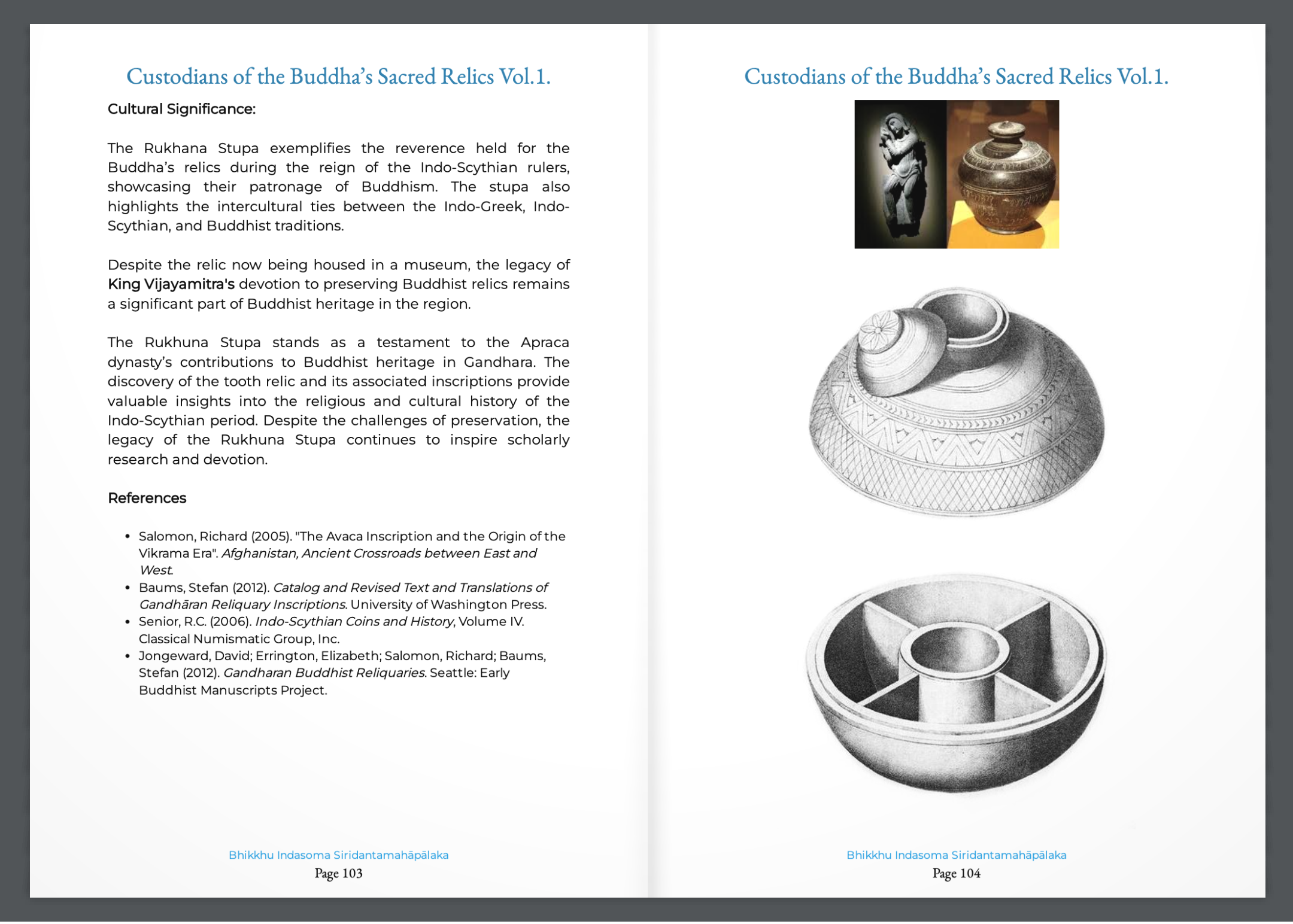
The Rukhuna Stupa and The Lord Buddha Tooth Relics


Relics of the Buddha


The Kissanapath Monastery and The Robe of the Lord Buddha


Abstract


This article examines the historical evolution, cultural significance, and enduring legacy of the Kissanapath Monastery, established in the 11th century by Atissaraka (1008–1064). Tracing its tumultuous history through invasions, natural disasters, and restorative efforts, the study explores the monastery’s role in housing sacred Buddha relics and its importance within the Gelugpa tradition. Emphasis is placed on the interplay of preservation, spiritual practice, and historical memory as the monastery navigated the challenges of colonial and post-colonial eras.


Introduction


The Kissanapath Monastery, situated amidst the rugged terrain of the Himalayas, stands as a testament to the resilience of Buddhist heritage. Founded in the 11th century by the renowned abbot Atissaraka, the monastery’s history reflects the interplay of spiritual devotion, political upheaval, and environmental challenges. Over centuries, the monastery has been a custodian of two sacred robes and other relics tied to the Buddha and King Suddhodana, lending it immense religious and cultural significance.

This article delves into the intricate tapestry of events that shaped the Kissanapath Monastery, from its destruction under Mongol invasions during the reign of the Fifth Dalai Lama to restoration efforts in the 20th century. It further examines the monastery’s murals, artifacts, and evolving role within the Gelugpa sect alongside sister monasteries such as Siri Pattavihara and Galyasiri Vihara.


Historical Evolution and Significance


The monastery’s establishment in the 11th century marked a significant phase in the dissemination of Buddhist practice in the region. Atissaraka’s vision for the monastery was deeply rooted in preserving sacred relics, including robes once offered by King Suddhodana to the Buddha. These robes, entwined with narratives of spiritual attainment, symbolize milestones in Buddhist teachings, inspiring adherents to this day.

During the mid-17th century, the Mongol invasions led by allies of the Fifth Dalai Lama caused extensive damage to the monastery, a pattern repeated in subsequent centuries. The Dogra army’s incursions in 1841 under Ghulam and Rahim Khan, coupled with natural calamities such as fires in the 1840s and an earthquake in 1975, further tested the resilience of this spiritual haven. However, restoration efforts spearheaded by the Archaeological Survey of India and local authorities revitalized the structure, ensuring its survival for future generations.


Religious Artifacts and Practices


Among the treasures housed in Kissanapath Monastery are murals depicting pivotal moments, such as King Suddhodana offering robes to the Buddha. The monastery’s architecture—a three-story structure with an underground chamber for preserving relics—is a hallmark of Buddhist monastic design. The Tansong chamber’s gilded murals and the assembly hall’s detailed adornments reflect the artistic and devotional zeal of its patrons.


The relics housed here have a storied past, with King Suddhodana’s re-offerings of robes symbolizing progressive spiritual attainments. These narratives underscore the monastery’s role in perpetuating the Buddha’s teachings, acting as a bridge between ancient traditions and contemporary practice.


Conclusion


The Kissanapath Monastery is said to have been founded in the 11th century by the renowned abbot Atissaraka (1008–1064). In the mid-17th century, during the reign of the Fifth Dalai Lama, the monastery suffered destruction at the hands of the Mongols. Around 1821, conflicts erupted between the Ladakh and Kullu clans. In 1841, the Dogra army under Ghulam Khan and Rahim Khan inflicted severe destruction on the monastery. Later that year, the Sikh community also faced attacks. During the 1840s, the monastery was damaged by fire, and in 1975, it was struck by a severe earthquake. Restoration efforts were carried out with the support of the Archaeological Survey of India and the State Public Works Department. The walls of the monastery are adorned with mural paintings depicting King Suddhodana offering robes. The Kissanapath Monastery houses a collection of ancient murals, Buddha images, and books. The three-story structure's most significant area is the underground chamber, used to preserve two sacred robes and other relics. A chamber known as “Tansong” is decorated with gilded mural paintings. The ground floor features a beautifully adorned assembly hall and quarters for numerous monks. The monastery is now part of the Gelugpa sect, alongside the Siri Pattavihara Monastery and the Galyasiri Vihara Monastery. The sacred robes were personally sewn by King Suddhodana when inviting his son, the Buddha. He offered the first set of robes to his son as a royal gift. Following this, the Buddha preached the verses starting with Uttithe Napapajeya, which inspired King Suddhodana to reach the state of Sotapanna (Stream-Enterer). The Buddha wore the first robe for three days before relinquishing it as a royal offering to the Dhamma. King Suddhodana later re-sewed the robe and reoffered it to the Buddha. The Buddha then preached the verses beginning with Dhammanca Upasama, inspiring the King to attain Sakadagami (Once-Returner). The Buddha wore this robe until receiving the Ayusankha robe offered by Nakula’s parents. During King Udayabhadda’s reign, the monk Saratta discreetly carried two sacred robes. These robes, hidden from history for centuries, were later discovered to be housed in the Kissanapath Monastery built by Atissaraka in the 11th century. It was later learned that the Fifth Dalai Lama, with the help of the Mongols, attempted to retrieve these robes. In 1821 and 1841, further attempts were made from various locations to seize the sacred robes and other relics.

The Kissanapath Monastery stands as an enduring symbol of faith, resilience, and cultural heritage. Its history, marked by periods of devastation and renewal, offers valuable insights into the dynamic interplay of religion, politics, and cultural preservation. As a custodian of sacred relics and a beacon of spiritual practice, the monastery’s legacy continues to inspire devotion and scholarly inquiry.


Sao Dhammasami

Research Scholar /Author


The discovery of Buddha's finger relics Maggadipa Stupa in Logar Province, Afghanistan


The remarkable discovery of Buddha’s finger relics in the Logar Province of Afghanistan stands as a profound testament to the region’s historical and cultural prominence during the Kushan Empire. This empire, flourishing between the early first century CE and the third century CE, played a pivotal role in shaping the religious and artistic landscapes of Central and South Asia.

The Kushan Empire: A Nexus of Culture and Faith

Under the Kushan rulers, particularly during the reign of Emperor Vasudeva I, the sixth ruler of the dynasty, the empire became a hub of cultural exchanges. The Kushans, known for their patronage of Buddhism, facilitated the propagation of the faith across vast territories. Their era was characterized by a unique syncretism between Indo-Greek artistic traditions and Buddhist devotional practices. This fusion is evident in the architectural styles and sculptural motifs that emerged during the period, blending Hellenistic, Indian, and Central Asian influences.


The Maggadipa Stupa: A Testament to Devotion

The Maggadipa Stupa, associated with the relics, is a prime example of the spiritual and architectural endeavors of the Kushan era. This monument not only served as a religious sanctuary but also as a symbol of the empire’s dedication to the dissemination of Buddhist teachings. The stupa’s design, influenced by both Indian and Greek architectural principles, reflects the cultural syncretism of the time.


Bhikkhu Indasoma Siridantamahapalaka's research (October 28, 2022) located these relics, Preserved by Naga.


Comprehensive Statement on the Discovery and Research of Buddha Relics

 Namo Tassa Bhagavato Arahato Samma Sambuddhassa


Comprehensive Statement on the Discovery and Research of Buddha Relics

January 18, 2025

Recent scholarly research has unveiled a significant array of relics associated with the life, death, and cremation of the Lord Buddha. Despite these discoveries, detailed records of specific stupas housing these relics remain limited, with only 120 stupas documented to contain such sacred items. The types of relics identified include:

  • Tooth Relics
  • Bone Relics
  • Fragments of Bone Relics
  • Nails
  • Hair Relics
  • Pieces of Cremated Remains
  • Relics from the Buddha's Cremation
  • Blood Relics
  • Ashes
  • Relics Found at the Buddha's Burial Site
  • Bowl
  • Robes
  • Walking Stick
  • Footprint

A notable finding from this research is the absence of bone relics exceeding two inches in size within the documented records and archaeological excavations. Buddhist relics, some as small as sesame seeds, have been discovered in ancient stupas. However, it is important to highlight that confirmed discoveries of Buddha bone relics exceeding two inches have been venerated in Myanmar, a finding absent from prior research involving 120 articles and books consulted. This underscores the need for further comprehensive studies to document and preserve these significant relics.

In addition to the primary relics, smaller items such as gold fragments, pearl-like objects, and other minute pieces associated with relics have been found. These are rare and typically located in specific stupas, yet records detailing the exact locations of these relics remain scarce.

Among the main categories of relics discovered, some notable examples include:
  • Personal Items of Prince Siddhartha Gautama: Earrings, rings, and other daily-use items believed to have belonged to the Buddha during his lifetime.

  • Relics Acquired During the Buddha's Lifetime, including:

    • Tooth relics (broken teeth)
    • Nails
    • Blood-stained relics, collected at the time of the Buddha's passing and noted to remain pure without any impurity.
  • Relics from the Buddha's Cremation, such as bones, teeth, and other materials preserved as part of the cremation rituals.

  • The Buddha's Bowl, a sacred object used by the Buddha for alms collection.

  • The Buddha's Robes, worn by the Buddha during his monastic life and considered highly revered objects.

  • The Buddha's Walking Stick, a simple yet profound symbol of the Buddha's journey through his life and teachings.

  • The Buddha's Footprint, believed to be a mark left by the Buddha as a sign of his presence, which has become an object of veneration and a symbol of his enlightened path.


Historical records and excavations from ancient cities like Peshawar and other notable regions have documented the existence of these relics, linking them to significant historical events and places of worship.

In modern times, relics of the Buddha have been preserved in museums in Britain, Paris, and other Western countries, where they are displayed to the public. Similarly, relics currently housed in Myanmar and India continue to be revered and preserved, reflecting the ongoing importance of these sacred items in both historical and contemporary Buddhist practices.

A particularly momentous discovery is the unearthing of the Broken Front Tooth Relics of the Lord Buddha. According to the Mahฤparinibbฤna Sutta, following the Buddha's passing and cremation, four tooth relics were preserved. Two of these relics were enshrined in mythological realms—Trฤyastriแนƒล›a Heaven and the domain of the Nฤgarฤja—while the other two were kept in earthly locations: Gandhฤra and Kaliแน…ga.

Contact:

Sao Dhammasami

Researcher/Author

Ph.D(Candidate) ,M.A (Pali)

saodhammasami@hswagata.com

January 18, 2025


For further insights into the research findings featured in Custodians of the Buddha’s Sacred Relics Vol. 1: Discover the Legacy of Sacred Treasures, please refer to the references provided within the book.


References Book Details:

  • Sao Dhammasami, @ Bhikkhu Indasoma Siridantamahฤpฤlaka. (2025). Custodians of the Buddha’s Sacred Relics Vol. 1: Discover the Legacy of Sacred Treasures [ASIN: B0DT61C12R] (Kindle Edition). Amazon Kindle Direct Publishing. https://www.amazon.com/dp/B0DT61C12R

This publication unveils the rich heritage of sacred relics through meticulous research and detailed exploration, offering readers a deep understanding of their spiritual significance and cultural legacy.


Some Relics


"Transported from Kyunpyaw, Innphyar Village, Bhaya-Ngu Myauk-Kaung Zedi Monastery."

The interview file for Relics Received will be posted shortly.


Visit to Sri Dalada Maligawa, Kandy Short Video

Monastic Dhamma Vinaya Curriculum for Monks ( Assessment book )

๐Ÿ’ป Available Now on Amazon Kindle! ๐Ÿ“– Assessment book for the 227 rules of pฤtimokkha: Monastic Dhamma Vinaya Curriculum for Monks By Bhikkhu Indasoma Siridantamahฤpฤlaka Now Available on Kindle! Click below to embark on a journey through time and wisdom. Purchase this on Amazon, or download it for free from my Academia.edu page:https://bhikkhuindasomasiridantamahapalaka.academia.edu/ Preserve the past. Embrace the present. ๐Ÿ”— Your Copy Today! Preserve the past. Embrace the present. Inspire the future. Book sale proceeds will fund advanced DNA and carbon-14 dating, and relic preservation.

Dysentery (Blood Diarrhea) and the Buddha’s Sacred Blood Relics

 The Final Day of the Buddha: A Reflection on Parinibbฤna


On the final day of Gautama Siddhartha, the Buddha, his journey came to a poignant conclusion marked by both physical suffering and profound teachings. At the age of 80, the Buddha was traveling to Kusinฤra (present-day Kushinagar, India) when he accepted a meal offered by a blacksmith named Cunda. This meal, referred to as **sukaramaddava**, has been the subject of much debate, with interpretations ranging from soft pork to truffle-like mushrooms. Regardless of its nature, the meal led to severe abdominal pain and dysentery, symptoms that would soon mark the end of his earthly existence.


The Illness


Shortly after consuming the meal, the Buddha experienced intense discomfort, characterized by abdominal cramps and dysentery. Despite the physical distress, he maintained his composure and mindfulness, embodying the teachings he had shared throughout his life. Scholars suggest that his condition may have been exacerbated by the natural decline of aging and the toll of his extensive travels.


The Cause of the Buddha’s Death (Parinibbฤna)

  1. Historical Context of the Meal:
    According to the Mahฤparinibbฤna Sutta (Dฤซgha Nikฤya 16), during the Buddha's final journey, he accepted a meal offered by a blacksmith named Cunda (or Chunda). After consuming this meal, the Buddha experienced severe abdominal pain and dysentery but remained calm and mindful.

  2. Sukaramaddava (Controversial Food):

    • Some traditions interpret it as soft pork or pig-related meat.
    • Others interpret it as a type of truffle, mushroom, or root.
    • Regardless of what the food was, the Buddha developed symptoms shortly after consuming it.
  3. Medical Diagnosis (According to Tradition):

    • Gastroenteritis: Most scholars believe the Buddha suffered from dysentery (severe infection of the intestines).
    • Some scholars suggest the illness was from old age and the strain of traveling at the age of 80.

Final Instructions Before Death

Despite his illness, the Buddha continued his journey and reached Kusinฤra (present-day Kushinagar, India). There, he gave his final teachings, emphasizing:

  • Appamฤda (heedfulness): “All conditioned things are impermanent. Strive diligently to attain liberation (Nibbฤna).”

The Buddha then entered the four absorptions (jhana) and passed into Parinibbฤna (final release) at the age of 80.


"Dysentery" (Blood Diarrhea) is a medical condition that primarily affects the intestines, stomach, and digestive tract, causing symptoms such as abdominal cramps, diarrhea with mucus or blood, vomiting, and dehydration. This condition can be serious if left untreated, especially if accompanied by a significant loss of body fluids.


Causes of Dysentery (Blood Diarrhea)

  1. Contaminated Food or Water

    • Consumption of unclean or spoiled food and water.
    • Presence of harmful bacteria (Shigella), viruses, or parasites in food.
  2. Intestinal Infections by Pathogens

    • Shigella bacteria, which is a common cause of dysentery.
    • Entamoeba histolytica, a parasite that causes amoebic dysentery.
  3. Lack of Hygiene

    • Poor hygiene and sanitation can lead to the spread of infections that cause dysentery.

Symptoms of Dysentery

  • Diarrhea mixed with blood and mucus.
  • Severe stomach cramps and fever.
  • Fatigue and weakness due to fluid loss.
  • Nausea and vomiting.


The Journey to Kusinฤra


Even in the face of illness, the Buddha continued his journey, demonstrating his commitment to his path and teachings. Upon reaching Kusinฤra, he lay down between two trees, a serene setting that would become the backdrop for his final moments. His disciples gathered around him, filled with concern and sorrow, yet the Buddha remained calm, offering them solace and wisdom.


Final Teachings


In his last moments, the Buddha delivered profound teachings, emphasizing the principle of **Appamฤda** (heedfulness). He reminded his followers that “All conditioned things are impermanent. Strive diligently to attain liberation (Nibbฤna).” This message encapsulated the essence of his teachings, urging his disciples to remain mindful and dedicated to their spiritual practice.


As he prepared to enter **Parinibbฤna** (final release), the Buddha entered the four absorptions (jhana), a state of deep meditative concentration. With a tranquil mind, he passed away, leaving behind a legacy that would inspire countless generations.


The Significance of His Passing


The Buddha's death was not viewed as a tragedy within the Buddhist tradition. Instead, it was seen as the ultimate liberation from the cycle of birth and death (Saแนƒsฤra). His passing served as a reminder of the impermanence of life and the importance of striving for enlightenment.


Dysentery, also known as blood diarrhea, is a serious medical condition that primarily affects the intestines, stomach, and digestive tract. It is characterized by symptoms such as abdominal cramps, diarrhea mixed with mucus or blood, vomiting, and dehydration. If left untreated, dysentery can result in severe complications due to significant fluid and blood loss. Historical accounts indicate that even the Lord Buddha suffered from dysentery during his final days, a poignant reminder of the frailty of the human body.


The Buddha’s Battle with Dysentery

In the Buddha’s final days, it is recorded that he endured a severe case of dysentery, resulting in significant blood loss. His resilience in the face of immense physical suffering stands as a testament to his profound mindfulness and strength. The Buddha's condition worsened, leading to a critical point where his attending physician prepared seven bottles filled with gutha (a Pali term often referring to bodily waste in the medical context).


The Mystery of the Seven Bottles

Despite being intended to contain a medicinal sample, each bottle was filled entirely with the Buddha’s blood instead of the expected contents. These seven bottles, symbolic of the Buddha’s mortal suffering, were preserved with reverence by his followers. After the Buddha's passing, the physician entrusted the blood-filled bottles to a sacred stupa (reliquary monument) as bodily relics of the Buddha’s compassionate journey.

King Ajฤtasattu and the Dhatunidhana

Upon receiving reports about the stupa containing these sacred blood relics, King Ajฤtasattu of Magadha became intrigued. He ordered the stupa to be opened—a procedure known in Pali as Dhatunidhana, meaning "opening of the relic chamber." The king took possession of the sacred blood bottles, further amplifying their reverence as symbols of the Buddha’s sacrifice.

The Journey of the Blood Relics to King Kanishka’s Empire

Centuries later, during the reign of King Kanishka, the renowned Kushan emperor who expanded his empire to Pฤแนญaliputra (modern-day Patna), the relics once again came into prominence. During his conquest, King Kanishka discovered two of the Buddha’s blood plasma bottles within a stupa. Deeply moved by this profound discovery, the king transported the relics back to his kingdom. In their honor, he commissioned the construction of a grand stupa, aptly named The Blood Relics Stupa, to preserve these sacred remnants.

During the Buddha's era, the renowned physician Sivaga performed brain surgery using advanced medical tools and techniques, suggesting a high standard of medicine that enabled effective blood plasma management.


Charles Masson and others  discovered that Buddha's tooth relics, including blood plasma, were remarkably well-preserved due to ancient techniques. Relics were treated with chemical and herbal liquids, which, upon opening, vaporized (like alcohol). This advanced preservation method accounts for the excellent condition of the 2500-year-old tooth, hair, blood plasma, and nails.


Preservation of the Buddha’s Blood Relics in Modern Times

The Blood Relics Stupa became a site of pilgrimage and devotion for centuries. However, with time, the relics were rediscovered during archaeological excavations. It is believed that some of the blood relics were transported to the British Museum, where they are preserved as invaluable historical and spiritual artifacts. The Buddha’s blood relics stand as an enduring symbol of his physical trials and unwavering spiritual resolve.


Conclusion


The final day of the Buddha was a profound culmination of his teachings and life experiences. His ability to remain mindful and composed in the face of suffering exemplified the core principles of Buddhism. As he transitioned into Parinibbฤna, the Buddha left a lasting impact on his followers, encouraging them to pursue their spiritual paths with diligence and awareness. His legacy continues to resonate, reminding us of the importance of mindfulness, compassion, and the pursuit of liberation.The narrative of the Buddha’s dysentery and the preservation of his blood relics transcends mere historical documentation. It reflects the profound veneration of his disciples and later generations for the mortal struggles endured by the Enlightened One. The relics, enshrined and revered across empires and generations, serve as a reminder of the Buddha’s immense compassion, resilience, and teachings that continue to inspire millions around the world.


Bhikkhuindasoma (siridantamahapalaka) Researcher ,Writer and Master Treainer Ph.D(Candidate), M.A(Pali)

Research Questions for Dr. Ashin Nyanissara (Sitagu Sayadawgyi) Regarding the Preservation and Testing of Buddha Tooth Relics:

Sao Dhammasami (Researcher) emailed Dr. Ashin Nyanissara (Sitagu Sayadawgyi) about preserving and testing Buddha tooth relics, receiving a phone call in response. 

  1. Research and Data Collection at the British Museum

    • Did Dr. Ashin Nyanissara visit the British Museum in England for the purpose of researching and collecting data related to the Buddha Tooth Relics? If so, what were the specific objectives and outcomes of his visit?
  2. Acquisition of Relics from Ancient Sites

    • Did Dr. Ashin Nyanissara bring Buddha Tooth Relics, along with bone relics, ashes, hair, and robes, from ancient stupas in regions such as Afghanistan and Pakistan (formerly part of India)? If so, how were these relics identified and authenticated before being preserved at Sitagu Sayadawgyi’s temple?
  3. DNA and Carbon-14 Testing

    • Did Dr. Ashin Nyanissara arrange for DNA and Carbon-14 testing of the Buddha Tooth Relics in England? What was the purpose of conducting these tests, and which institutions were involved in the process?
  4. Unintended Damage During Testing

    • Was Dr. Ashin Nyanissara informed that DNA and Carbon-14 testing procedures might involve irreversible changes to the relics, such as reducing parts of them to powder? If so, what were his reactions to this, and how was the preservation of the relics addressed post-testing?
  5. Laboratory Fire Incident

    • Is it true that the laboratory where the DNA and Carbon-14 testing was conducted experienced a fire after the tests were completed? If so, what were the circumstances, and were any significant materials or findings lost in the incident?
  6. Preservation of 28 Tooth Relics

    • Is it accurate that Dr. Ashin Nyanissara currently preserves a total of 28 tooth relics, which were allegedly collected from ancient sites in Afghanistan, Pakistan, and other regions of old India? How are these relics being maintained, and what are the plans for their future preservation and research?

"You can view Dr. Ashin Nyanssara (Sitagu Sayardawgyi)'s answer at this link." https://www.hswagata.com/2024/12/debunking-misinformation-surrounding.html
Bhikkhuindasoma (siridantamahapalaka) Researcher ,Writer and Master Treainer Ph.D(Candidate), M.A(Pali)

Buddhist Images Bridging Faith Between Two Great Powers

Buddhas with Chinese Inscriptions from Bodhgaya

In 1862 CE (B.E. 2405), Alexander Cunningham surveyed Bodhgaya, the site of the Buddha's enlightenment. At that time, the sacred precinct (Bodhimanda) was in a state of neglect and ruin. Only a few Hindu Mahantas occasionally conducted rituals there. Cunningham excavated the area near the ancient ruins by the Sri Maha Bodhi Tree, which was then the third-generation tree and in such old age that it was about to fall. He discovered many Buddha images, but one was particularly extraordinary.

This Buddha image, carved from black stone typical of the Pala dynasty’s devotional sculptures, stood out. The inscription below was not in Sanskrit, Prakrit, or any Indian script—but in Chinese. The text reads:

“I, Bhikshu Zhi Yi (or Che Yi), from the Great Han Empire, made a vow on behalf of 300,000 people to follow the teachings that guarantee rebirth in a higher realm, by making merit through offering 300,000 copies of the Sutra of King Shang Sheng (a scripture concerning higher rebirths), and by reciting this sutra 300,000 times. This merit will result in rebirth in the Tusita Heaven.”

“Upon arriving in the land of Magadha, I was deeply moved by the Diamond Throne (Vajrasana), and I respectfully met the master of the Yogฤcฤra school named Gui Bao, along with a number of revered monks. Together, we made a vow to be reborn in Tusita Heaven.”

“Among the 300,000 people were: Gui Bao (1st), Che Yi (2nd), Guang Feng (3rd), as well as Hui Yan, Zhong Da, Shi An Sun, Yuan Chen, Yi Xian, Hui Xiu, Che Yong, Feng Sheng, Xing Yun, etc. All of them aspired to venerate Metteyya (Maitreya), the compassionate and revered one. Now, the seven Buddhas have been inscribed on this stele.”

From this inscription, it is evident that the creator was Chinese, while the sculptor was likely Indian. The Chinese inscription may have been carved by a Chinese monk or artisan traveling with the group. The quality of the carving suggests skilled craftsmanship—had it been done by someone unfamiliar with Chinese script, the characters may have been poorly rendered or damaged.

The Eight Buddhas Carved on the Stele:

  1. Vipassi Buddha (ไฝ›้™€ๆฏ—ๅฉ†ๅฐธ่ฏญ)

  2. Sikhฤซ Buddha (ๅฐธๆฃ„ไฝ›)

  3. Vessabhลซ Buddha (ไฝ›้™€ๆฏ—่ˆๅฉ†่ฏญ)

  4. Kakusandha Buddha (ไฝ›้™€่ฏญ่จ€)

  5. Koแน‡ฤgamana Buddha (ไฝ›้™€ๆ‹˜้‚ฃๅซ่ฏญ)

  6. Kassapa Buddha (่ฟฆๅถไฝ›่ฏญ่จ€)

  7. Gotama Buddha (ลšฤkyamuni) (้‡Š่ฟฆ็‰Ÿๅฐผไฝ›่ฏญ่จ€)

  8. Metteyya Buddha (Maitreya) (ๅผฅๅ‹’ไฝ›่ฏญ)

Current Location:

This artifact is currently housed in the Indian Museum in Kolkata, India.

Historical Context and Significance:

The inscription is attributed to Master Zhi Yi (Che Yi), who traveled to the Sri Maha Bodhi Tree and visited the sacred sites in India around 1057 CE (B.E. 1600). This inscription serves as significant evidence that Bodhgaya has long been a central pilgrimage destination for Buddhists, particularly Chinese Buddhists.

According to the book Chinese Monks in India by Venerable I-Ching (Yi Jing), who journeyed to India in 671 CE (B.E. 1214), there were approximately 56 Chinese monks residing in India at that time for Buddhist studies. The names of many of these monks are listed in that very book.

This Chinese inscription is not the only one discovered at Bodhgaya, and further inscriptions will be gradually introduced for those interested in further study.

Broader Implication:

This artifact stands as historical evidence of the deep cultural and religious ties between two Asian powers— China and India. Buddhism served as the sacred bridge, fostering strong diplomatic and spiritual connections between these two great civilizations.